
Blog posts tagged "IoT"

Adoption of edge computing is taking hold as organisations realise the need for highly distributed applications, services and data at the extremes of a network. Whereas data historically travelled back to a centralised location, data processing can now occur locally allowing for real-time analytics, improved connectivity, reduced latency
Linux software developers historically have faced a number of challenges including fragmentation, distribution complexity and a lack of metrics into the success of their applications. Once an application is built, the journey does not end there – for companies and individual developers creating apps, thought needs to be given to promoting

This blog demonstrates how to easily deploy monitoring tools at the edge using Kubernetes. In IoT scenarios, such a deployment brings the benefits of privacy, latency and minimal bandwidth cost. Luckily, MicroK8s the single node Kubernetes, caters for such use cases. The beauty of MicroK8s is that deployment can be done in a couple of

Traditional development methods do not scale into the IoT sphere. Strong inter-dependencies and blurred boundaries among components in the edge device stack result in fragmentation, slow updates, security issues, increased cost, and reduced reliability of platforms. This reality places a major strain on IoT players who need to contend wit

Drones, and their wide-ranging uses, have been a constant topic of conversation for some years now, but we’re only just beginning to move away from the hypothetical and into reality. The FAA estimates that there will be 2 million drones in the United States alone in 2019, as adoption within the likes of distribution, construction,

Date: May 13/16Location: Santa Clara Convention Center, CA, USABooth: 1708 Four years ago Canonical launched Ubuntu Core at Internet of Things World. The last four years have seen Ubuntu not only build a name for itself in IoT but also impose itself as a leading Embedded Linux, as highlighted in the latest Eclipse Developer survey.

The results are in! Eclipse.org recently published their 2019 IoT Developer Survey. Ubuntu is again the top choice for embedded & IoT, with our cousins Raspbian and Debian taking 2nd and 3rd respectively. The numbers fall off pretty steeply after that. 😉 For those who create embedded products or solutions, the message couldn’t be more

18th April, 2019: Canonical today announced the release of Ubuntu 19.04, focused on open infrastructure deployments, the developer desktop, IoT, and cloud to edge software distribution. “The open-source-first on Ubuntu movement in telco, finance, and media has spread to other sectors. From the public cloud to the private data center to th

I recently returned from an extended visit to Germany, where my colleagues and I kept busy attending conferences, visiting customers and partners. We travelled around the country, talking to many, many people at dozens of companies about embedded Linux. We confirmed existing trend data, and gained exciting new insights! Now that I’m back,
As connected devices proliferate in the Internet of Things (IoT), companies need an efficient over-the-air (OTA) update mechanism for remotely delivering new software, features, firmware updates and security enhancements to potentially huge numbers of geographically dispersed embedded devices. Pushing software updates can range from a few

Canonical and AWS are excited to announce the public release of AWS IoT Greengrass as a snap. AWS IoT Greengrass is software that brings local compute, messaging, data caching, sync, and ML inference capabilities to your IoT device. IoT and embedded developers can now easily install and get started with IoT Greengrass in seconds on

At Canonical, helping customers overcome their challenges is what we do every day. In the IoT world, a common challenge we encounter is customers who are interested in transitioning to Ubuntu Core and the snapcraft.io ecosystem, but are unsure how to begin. This post covers the recommended approach. In most cases, it’s relatively easy for

Ubuntu Core (UC) is Canonical’s take in the IoT space. There are pre-built images for officially supported devices, like Raspberry Pi or Intel NUCs, but for other boards, when there is no community port, one needs to create one on their own. This is the the case if one wants to run Ubuntu Core 18

Security remains the number one concern when designing and deploying IoT devices. High profile breaches continue to occur and concerns cease to subside. For any organisation, security needs to be front of mind and considered from the start – not as an afterthought. Having no mechanism in which to address security concerns can be as
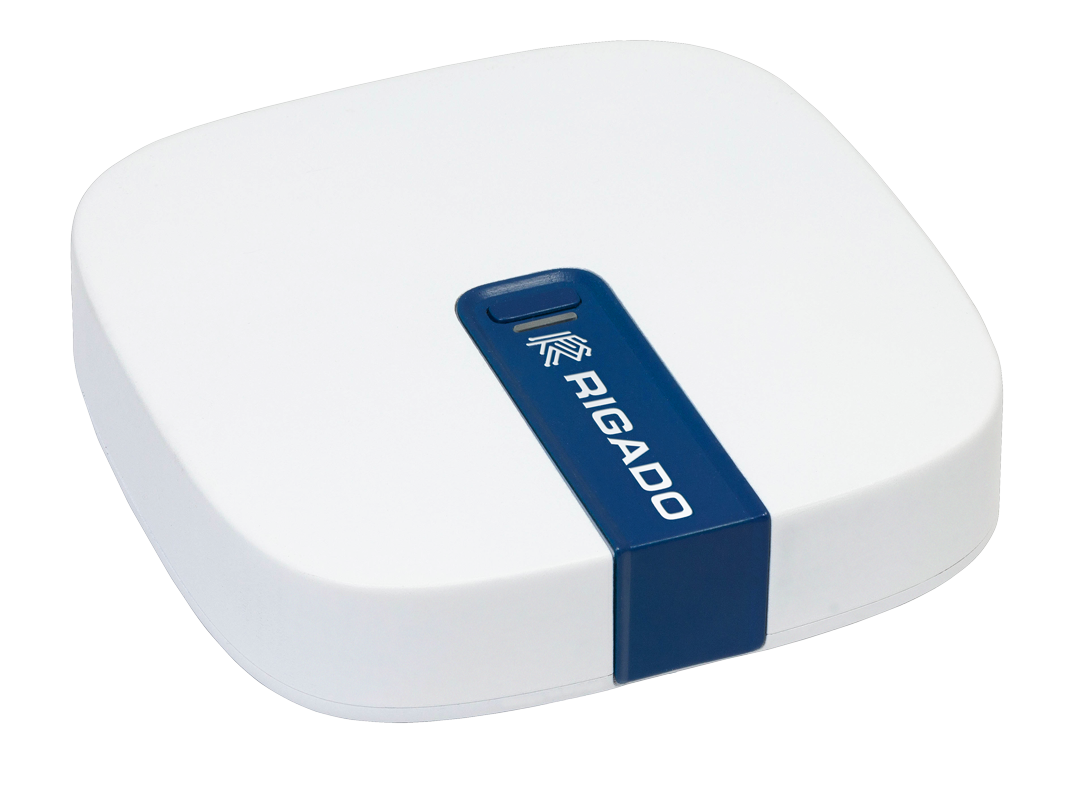
With a proliferation of related hardware, software and solutions being rushed out to capture the promise of a multi-billion dollar IoT industry, vendors are under pressure to decrease their development time and speed up their time to market. Choices such as selecting the right infrastructure from the outset become even more important duri

My current job involves me mostly working in the upper layers of the desktop software stack however I started out working in what was then called embedded engineering but now would probably be know as the Internet of Things (IoT). I worked on a number of projects which normally involved taking some industrial equipment (radio