
Blog posts tagged "MicroK8s"

MicroK8s is now available as a strictly confined snap on 1.25! What is strict confinement? In summary, it is a snap confinement level that provides complete isolation, up to a minimal access level that’s always deemed safe. Strictly confined snaps can not access files, networks, processes, or any other system resource without requesting s

We consistently follow the upstream release cadence to provide our users and customers with the latest improvements and fixes, together with security maintenance and enterprise support for Kubernetes on Ubuntu. This blog is a quick overview of the latest development highlights that are made available in Canonical Kubernetes 1.24 as well
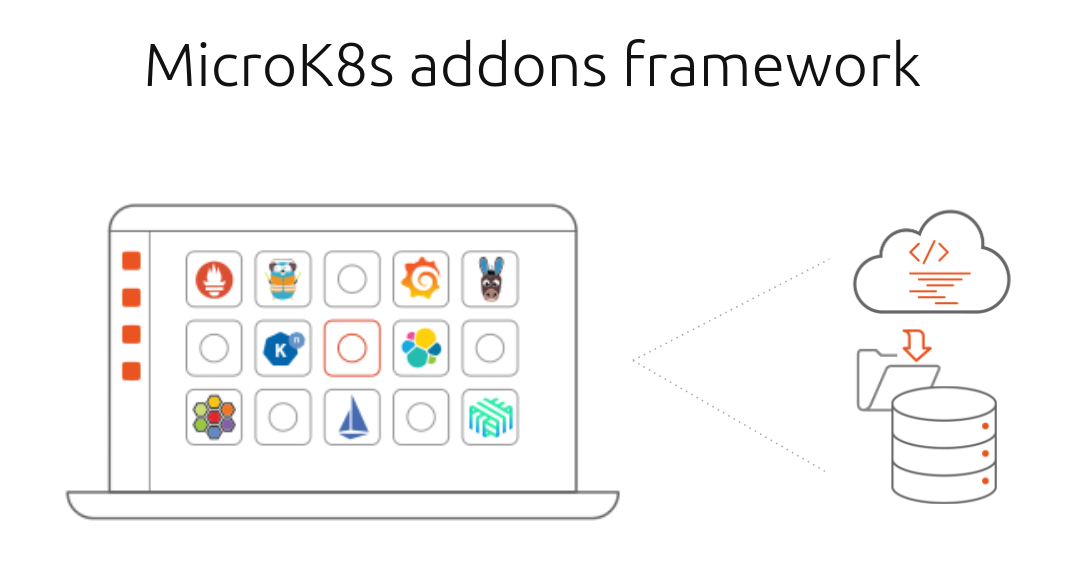
This is a guest post, originally posted on Konstantinos Tsakalozos’ personal blog, adapted and reproduced here with his permission. Konstantinos is a Staff Engineer at Canonical and the Software Lead behind MicroK8s. MicroK8s addons, extra services which can be added to your bare-bones cluster, are a great favourite with users as they all

The latest Kubernetes release, 1.24, is about to be made generally available. Today, the community announced the availability of the 1.24 release candidate. Developers, DevOps and other cloud and open source enthusiasts who want to experiment with the latest cutting edge K8s features can already do so easily with MicroK8s. MicroK8s is a C

This is a guest post, originally posted on Angelos Kolaitis‘ personal blog, reproduced here with his permission. Angelos is a MicroK8s software engineer at Canonical. How we brought a universal, cluster-wide storage solution to MicroK8s. Why is storage in Kubernetes hard? Kubernetes is well-known as an open-source system for automating de

Containerisation has transformed the enterprise IT landscape, driving faster, more secure, and more predictable software delivery than ever before. Thanks to technologies like Docker, building containerised applications is easy, and many businesses are working with hundreds or even thousands of containers. To effectively deploy and manage
The Kubernetes crew at Canonical is delighted to announce that Canonical Kubernetes 1.23 is now generally available. The team is committed to releasing in tandem with upstream so our users and customers can benefit from the latest features and improvements as soon as they become available. This blog is a quick introduction to Canonical Ku

Today, Kubernetes 1.23 release candidate was made available upstream for testing and experimentation. General availability is planned for December 7th, so now is the time to report back any issues or bugs. Developers, DevOps and open source software enthusiasts can try out the latest features using MicroK8s. MicroK8s is a lightweight, CNC

Canonical, the makers of Ubuntu, will have a major presence at this year’s KubeCon + CloudNativeCon NA. The Cloud Native Computing Foundation’s flagship conference brings together adopters and technologists from leading open-source and cloud-native communities. It takes place Oct. 11-15 in Los Angeles and with a virtual option. Ubuntu is
Auckland, New Zealand – Portainer announced the launch of its Portainer Business Charmed Operator, allowing for seamless integration with Canonical’s Charmed Kubernetes distribution. The new Portainer charm allows users of Canonical’s Charmed Kubernetes distribution to automatically install and integrate Portainer Business as part of the

Register for free What is Operator Day? Operators simplify everyday application management on Kubernetes. Learn how to use them, how to create them in Python, and how to evolve from configuration management to application management. We’re working to create a community-driven collection of operators for everything that’s integrated and te

Who is this for? This blog can provide you with useful information on how to set up a Kubernetes CI/CD workflow using state-of-the-art of open source DevOps tools, whether you are: A developer at the start of your journey with enterprise software An experienced software engineer working on your company’s applications, or An engineering l
On August 4th 2021, Kubernetes (K8s) upstream announced the general availability of Kubernetes 1.22, the latest version of the most popular container orchestration platform. At Canonical, we actively track upstream releases to ensure our Kubernetes distributions align with the latest innovations that developers and businesses need for the

Today, the Kubernetes community made the 1.22 release candidate available, a few weeks ahead of general availability, planned for August the 4th. We invite developers, platform engineers and cloud tech enthusiasts to experiment with the new features, report back findings and bugs. MicroK8s is the easiest way to get up and running with the
Industry global survey from Canonical: 85% of enterprises have yet to cross the chasm to full Kubernetes and Cloud Native adoption.Data from 1,200 respondents and insights from seven industry experts reveal rapid growth, some growing pains Read full report London, UK, June 29, 2021 – Despite high adoption rates of cloud native technologie

The Ubuntu in the wild blog post ropes in the latest highlights about Ubuntu and Canonical around the world on a bi-weekly basis.